
01/29/2024

How to recover data from HP Laptop M2 SSD

[vc_video link=”https://youtu.be/WioCDXvy9I0″ title=” How to recover data from HP Laptop M2 SSD “]

Title: How to Recover Data from a Broken Laptop Using a USB M.2 SSD Adapter

Introduction:

“Hi, welcome! Simon here. Hope you’re doing well. If you’re looking to recover data from a broken laptop, this is the video for you. You’ll need a USB M.2 SSD adapter, which allows you to read the M.2 SSD drive like an external thumb drive. Let’s get started.”

Steps to Recover Data:

  1. Prepare the Laptop:
    • Remove the rubber feet from the bottom of the laptop to access the hidden screws.
  2. Remove the Screws:
    • Use a Phillips screwdriver to remove the four black screws on the top, two screws in the middle, and two more screws at the very bottom center.
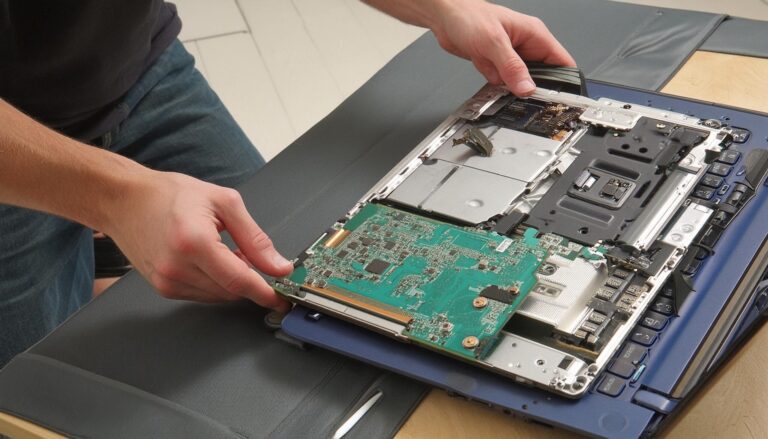
  3. Open the Laptop:
    • Use a metal prying tool to gently pry open the seam between the palm rest and the bottom case.
    • Switch to a plastic prying tool to avoid scratching the computer, and continue to work around the edges to remove the back cover.
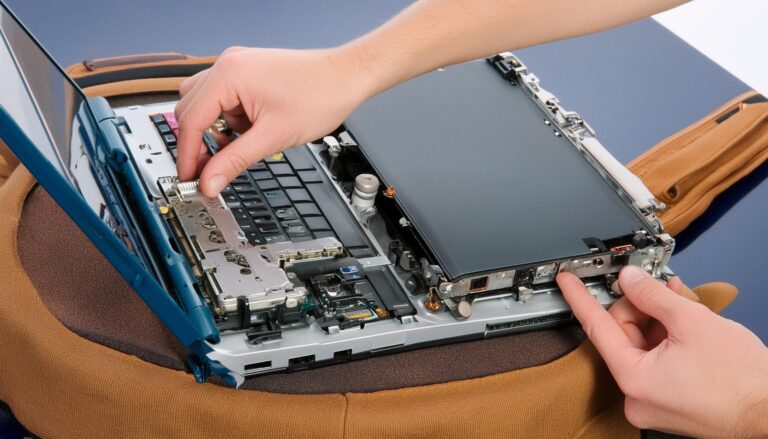
  4. Locate and Remove the M.2 SSD:
    • Locate the M.2 SSD in the bottom right corner of the laptop.
    • Remove the securing screw and slide the SSD out at a 45-degree angle.
  5. Use the USB M.2 SSD Adapter:
    • Insert the M.2 SSD into the USB adapter.
    • Plug the adapter into a different computer. The SSD will function as an external USB drive, allowing you to recover your data.

Additional Information:

  • “If you’re not sure where to buy the USB adapter, check the link in the description below. I’ll direct you to either Amazon or eBay where you can find the adapter and any necessary tools.”

Conclusion:

“Hopefully, this video is helpful. Thanks for watching! Until next time, bye now.”

Legal Disclosure:

UberGeeks video(s) or information provided on this website does not, and is not intended to, constitute legal advice, constitute IT professional advise, information technology expert, or tech related material; instead, all information and content available on this are for entertainment purposes only. No information contained in this video shall create any express or implied warranty or guarantee of any particular result.

UberGeeks shall not be held liable for any damages, losses, injuries, loss of data, or harm arising from the use of information or techniques presented in our video(s) or information provided on this website. By accessing and using our content, you agree to release us from any liability.

Participation in any activities or experiments presented in our video(s) is entirely voluntary. If you choose to replicate any actions or experiments, exercise caution, and prioritize your safety and the safety of your equipment.

Thank you for joining us on this IT journey. We hope you find our video(s) enjoyable. Remember, your participation in this channel is at your own discretion, and we encourage you to use the information responsibly and safely.

Transparency Note:

This article was collaboratively written with the assistance of ChatGPT, an AI language model developed by OpenAI. While the content was generated with AI assistance, it was reviewed and edited by our human editorial team to ensure accuracy and quality. As part of our efforts to enhance the user experience, we utilize artificial intelligence (AI) technologies to generate images and visual content on this website. Adobe Firefly AI-generated images may include graphics, illustrations, and other visual elements.
Related Articles