
08/08/2023

Macbook Air A1932 Screen Replacement

[vc_video link=”https://www.youtube.com/watch?v=BVvbmvtAAjM” title=”Macbook Air A1932 Screen Replacement”]

ChatGPT

Title: Comprehensive Guide to MacBook Air (Model A1932) Screen Replacement

Introduction:

Hello, Simon here! In this tutorial, we’ll dive into a step-by-step process for replacing the screen on a MacBook Air, specifically the 2018/2019 model A1932. Whether your MacBook Air has pixelated lines, fuzzy colors, or a cracked screen, this guide will help you fix it by replacing the full assembly.

Tools and Preparation:

For this repair, you’ll need a Pentalobe P5 screwdriver and a T4/T5 Torx screwdriver. These can be found on Amazon or eBay (links in the description). Ensure your MacBook is powered off before starting the repair. I’ll skip disconnecting the battery for this guide, but it’s recommended for safety.

Steps for Screen Replacement:

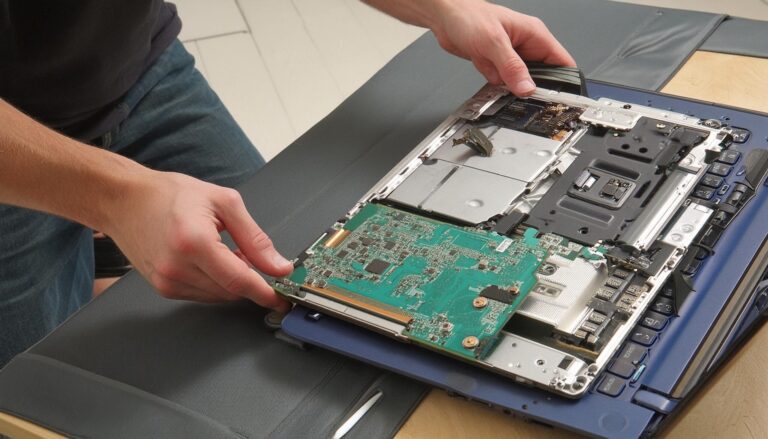
  1. Removing the Back Cover: Use the P5 to unscrew the back cover. Keep track of the screws as they vary in size.
  2. Disconnecting the Battery: Slide the battery connector to the left to disconnect the power.
  3. Removing the Wi-Fi and LCD Board Screws: Use a T4 screwdriver to remove the screws securing the Wi-Fi bracket and the T5 for the LCD board screws.
  4. Separating the Screen: Open the MacBook fully to slide out the old screen. You’ll remove the screws holding the hinges with a T8 screwdriver.
  5. Installing the New Screen: Position the new screen assembly and slide it into place. Ensure the LCD and Wi-Fi cables are properly positioned and not pinched.
  6. Reassembly: Reverse the disassembly process. Carefully reconnect all cables and screw the brackets and hinges back into place.
  7. Final Steps: Once reassembled, connect the MacBook to a charger before turning it on, as the first boot might take time after a battery disconnect.

Conclusion:

Screen replacement on a MacBook Air model A1932 is a delicate but manageable task if you have the right tools and patience. If this guide has been helpful, please consider showing your appreciation with a Super Thanks on YouTube. Don’t forget to hit the like button and subscribe for more tutorials. Thanks for watching, and see you in the next guide!

Legal Disclosure:

UberGeeks video(s) or information provided on this website does not, and is not intended to, constitute legal advice, constitute IT professional advise, information technology expert, or tech related material; instead, all information and content available on this are for entertainment purposes only. No information contained in this video shall create any express or implied warranty or guarantee of any particular result.

UberGeeks shall not be held liable for any damages, losses, injuries, loss of data, or harm arising from the use of information or techniques presented in our video(s) or information provided on this website. By accessing and using our content, you agree to release us from any liability.

Participation in any activities or experiments presented in our video(s) is entirely voluntary. If you choose to replicate any actions or experiments, exercise caution, and prioritize your safety and the safety of your equipment.

Thank you for joining us on this IT journey. We hope you find our video(s) enjoyable. Remember, your participation in this channel is at your own discretion, and we encourage you to use the information responsibly and safely.

Transparency Note:

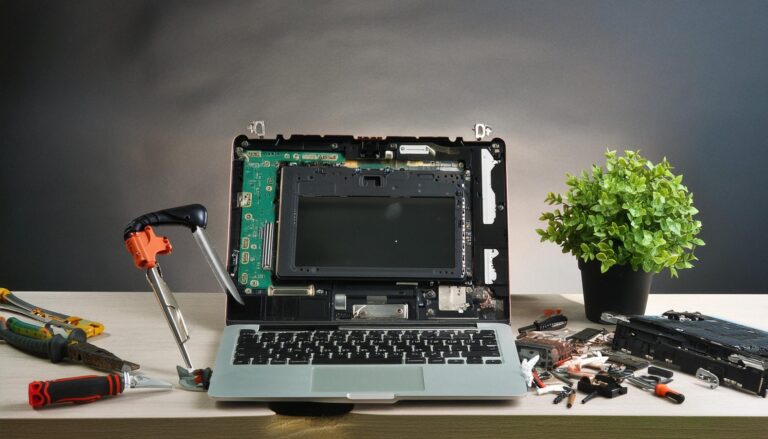
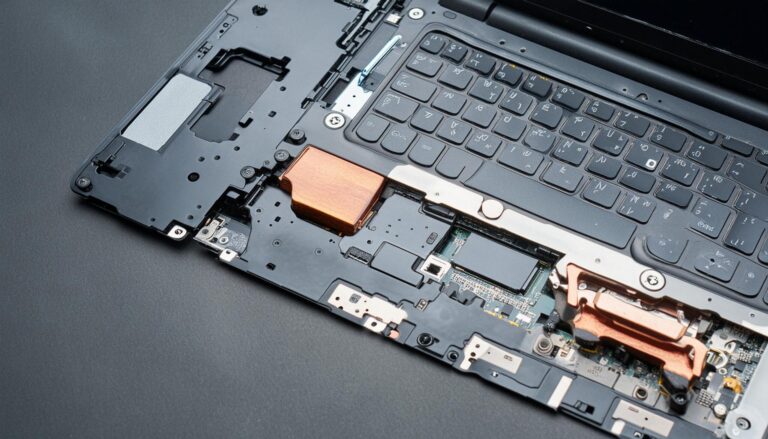
This article was collaboratively written with the assistance of ChatGPT, an AI language model developed by OpenAI. While the content was generated with AI assistance, it was reviewed and edited by our human editorial team to ensure accuracy and quality. As part of our efforts to enhance the user experience, we utilize artificial intelligence (AI) technologies to generate images and visual content on this website. Adobe Firefly AI-generated images may include graphics, illustrations, and other visual elements.

Related Articles