06/09/2021

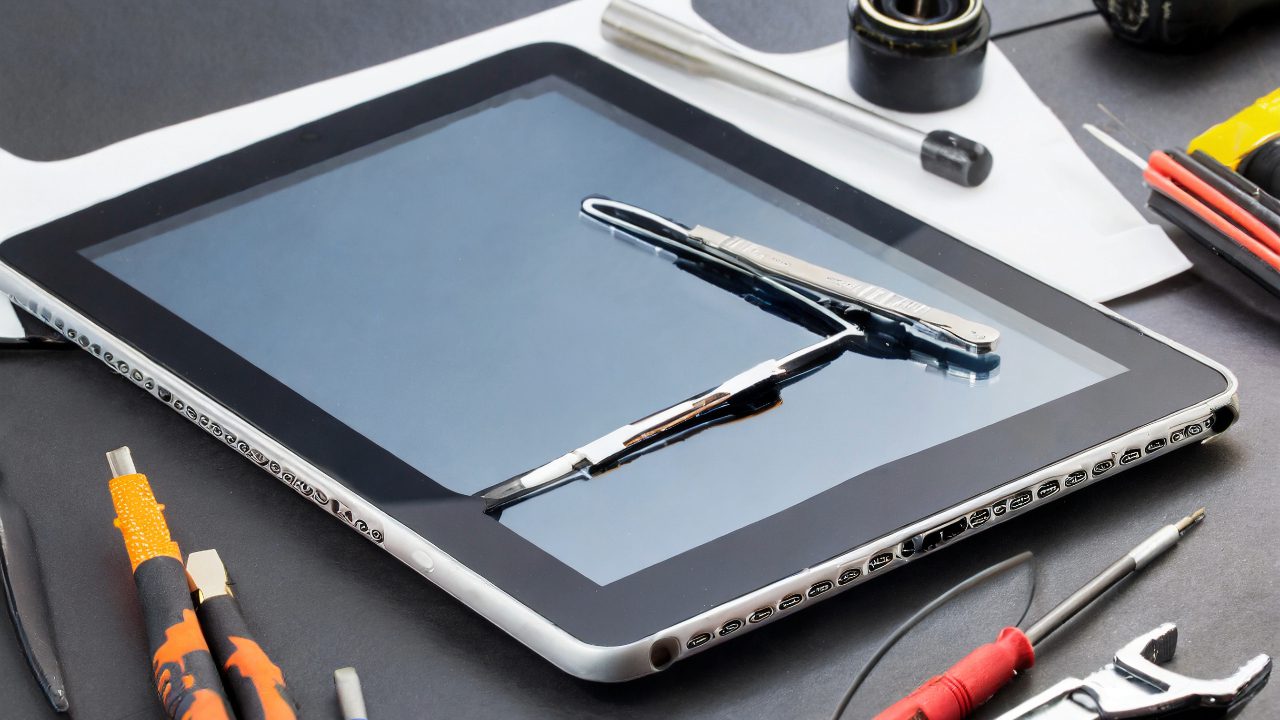
iPad 6 Screen Replacement – A1893 – A1954

[vc_video link=”https://www.youtube.com/watch?v=hF4ioNJpW74″ title=”iPad 6 Screen Replacement – A1893 – A1954″]

iPad 6th Generation Screen Replacement Tutorial

Introduction

  • Device: iPad 6th Generation, model A1893.
  • Objective: Replacing the cracked digitizer (glass) of the iPad.
  • Note: If both the LCD and digitizer are damaged, both need replacement.

Tools and Materials Required

  • Heat Gun: To soften the adhesive for glass removal.
  • Double-Sided Tape: Preferably strong adhesive tape.
  • Safety Goggles: To protect eyes from glass shards.
  • Additional Tools: Tweezers, Phillips screwdriver, plastic prying tools, scissors, and metal prying tool.
  • Super Glue: For securing the home button bracket.

Process Overview

Removing the Broken Glass

  • Heating the Glass: Using a heat gun to soften the adhesive.
  • Prying the Glass: Carefully removing the broken glass, particularly around sensitive areas like the Wi-Fi antenna and home button.

Preparing the New Digitizer

  • Peeling Protective Layers: Removing protective plastic from the new digitizer.
  • Covering Sensors: Applying tape over exposed sensors to prevent ghost touching.

Transferring the Home Button

  • Removing the Home Button: Carefully detaching from the old digitizer.
  • Reattaching to New Digitizer: Using super glue to secure the home button bracket.

Reassembling the iPad

  • Reconnecting the Digitizer and LCD: Ensuring proper alignment and connection.
  • Finalizing the Assembly: Applying new adhesive and securing the digitizer in place.

Testing

  • Functionality Check: Ensuring the home button and touch ID work correctly.
  • Display Check: Confirming the LCD screen displays correctly.

Conclusion

  • Advice: Recommends getting a better protective case for the iPad.
  • Request for Feedback: Invites viewers to comment and provide feedback.

This summary provides an overview of the steps involved in replacing the screen of an iPad 6th Generation, highlighting the care needed when handling components like the home button and the importance of proper reassembly. If you need more specific details on any part of the process, feel free to ask!

Legal Disclosure:

UberGeeks video(s) or information provided on this website does not, and is not intended to, constitute legal advice, constitute IT professional advise, information technology expert, or tech related material; instead, all information and content available on this are for entertainment purposes only. No information contained in this video shall create any express or implied warranty or guarantee of any particular result.

UberGeeks shall not be held liable for any damages, losses, injuries, loss of data, or harm arising from the use of information or techniques presented in our video(s) or information provided on this website. By accessing and using our content, you agree to release us from any liability.

Participation in any activities or experiments presented in our video(s) is entirely voluntary. If you choose to replicate any actions or experiments, exercise caution, and prioritize your safety and the safety of your equipment.

Thank you for joining us on this IT journey. We hope you find our video(s) enjoyable. Remember, your participation in this channel is at your own discretion, and we encourage you to use the information responsibly and safely.

Transparency Note:

This article was collaboratively written with the assistance of ChatGPT, an AI language model developed by OpenAI. While the content was generated with AI assistance, it was reviewed and edited by our human editorial team to ensure accuracy and quality. As part of our efforts to enhance the user experience, we utilize artificial intelligence (AI) technologies to generate images and visual content on this website. Adobe Firefly AI-generated images may include graphics, illustrations, and other visual elements.
Related Articles