06/03/2021

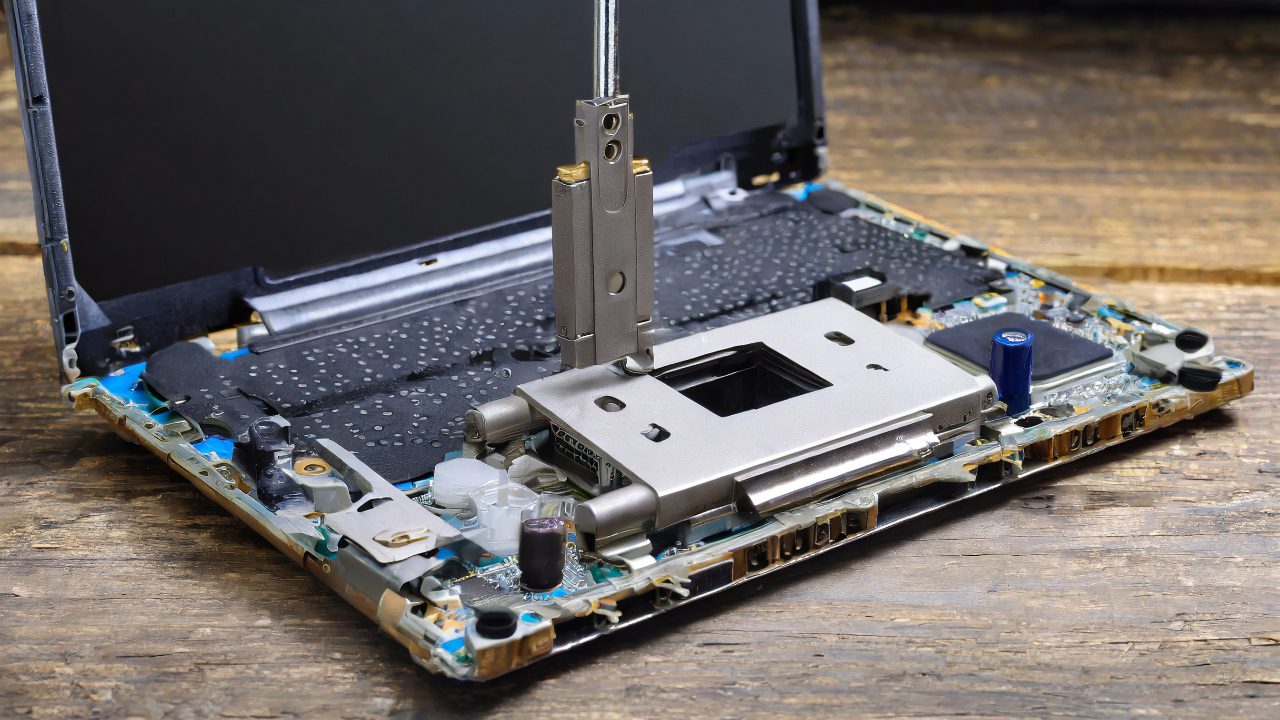
Alienware M17 Tear Down DC Jack Replacement

[vc_video link=”https://www.youtube.com/watch?v=haRT8BCemLU” title=”Alienware M17 Tear Down DC Jack Replacement”]

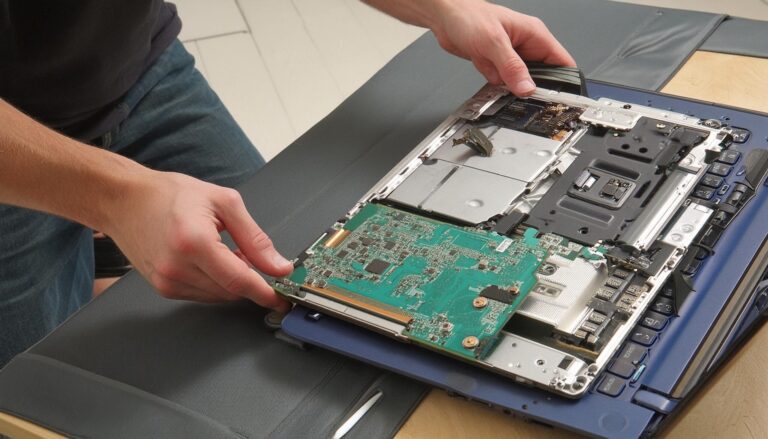
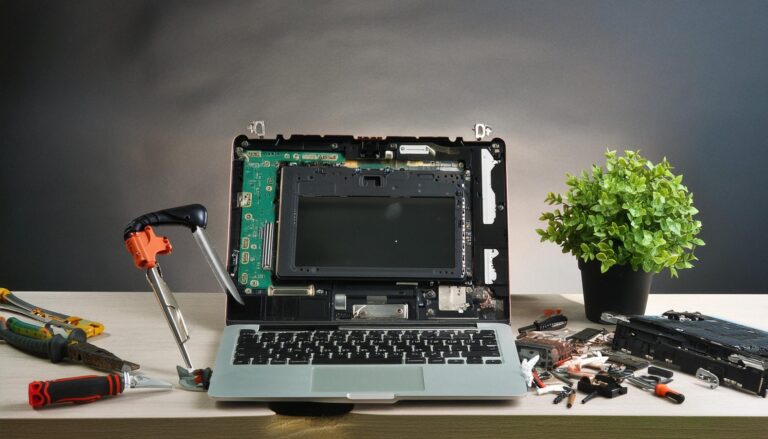
Alienware M17 Laptop DC Jack Replacement and Teardown

Introduction

  • Purpose: To replace a damaged DC jack and perform a complete teardown of an Alienware M17 laptop.
  • Model: Alienware M17, P37E.

Teardown Process

  • Initial Steps:
    • Remove the back cover.
    • Address potential additional replacements or upgrades (battery, hard drive, RAM, thermal paste).

Detailed Procedure

  • Battery Removal:
    • Remove screws and disconnect battery.
    • Model for replacement: IF22N or CN-0HYWXJ.
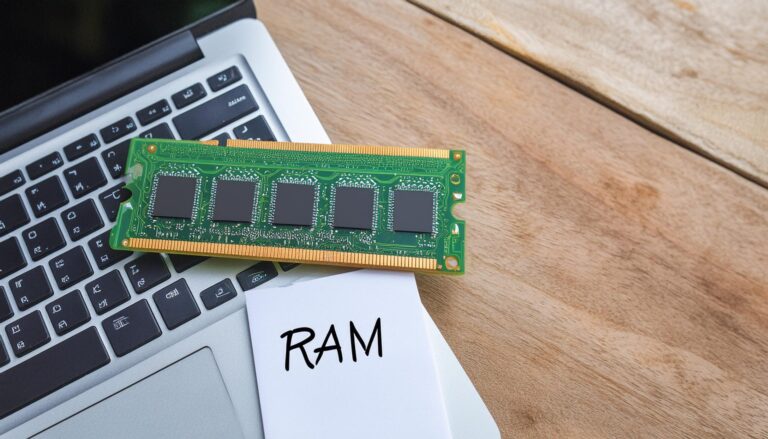
  • RAM Replacement:
    • Release clips to remove RAM (DDR4).
  • M.2 SSD Drive Removal:
    • Replace or upgrade if needed.
  • Secondary Hard Drive Removal:
    • Disconnect and remove the hard drive.
  • CMOS Battery:
    • Disconnect for motherboard removal.
  • Wi-Fi Card Removal:
    • Necessary for accessing other components.
  • LCD Screen Connector:
    • Disconnect carefully to avoid damage.
  • CPU Fan and Heatsink Removal:
    • Remove for access to CPU and GPU.
    • Clean and reapply thermal paste if necessary.
  • Motherboard Removal:
    • Remove all screws and connections for access to the DC jack.
  • DC Jack Replacement:
    • Remove the bracket holding the DC jack.
    • Install the new DC jack.
  • Reassembly Tips:
    • Ensure all cables are correctly placed before reassembling.

Additional Observations

  • Keyboard Replacement:
    • Keyboard is replaceable; screws must be removed for replacement.
    • Replacement part reference: CN03D7N.
  • Screen Replacement:
    • Hinges need to be opened for screen replacement.

Conclusion

  • Duration: Video is around 22 minutes long.
  • Call to Action: Reminder to like the video and subscribe to the channel for support.

This summary provides a comprehensive overview of the DC jack replacement and teardown process for the Alienware M17 laptop. If you have any specific questions or need more details on any part of the process, feel free to ask!

Legal Disclosure:

UberGeeks video(s) or information provided on this website does not, and is not intended to, constitute legal advice, constitute IT professional advise, information technology expert, or tech related material; instead, all information and content available on this are for entertainment purposes only. No information contained in this video shall create any express or implied warranty or guarantee of any particular result.

UberGeeks shall not be held liable for any damages, losses, injuries, loss of data, or harm arising from the use of information or techniques presented in our video(s) or information provided on this website. By accessing and using our content, you agree to release us from any liability.

Participation in any activities or experiments presented in our video(s) is entirely voluntary. If you choose to replicate any actions or experiments, exercise caution, and prioritize your safety and the safety of your equipment.

Thank you for joining us on this IT journey. We hope you find our video(s) enjoyable. Remember, your participation in this channel is at your own discretion, and we encourage you to use the information responsibly and safely.

Transparency Note:

This article was collaboratively written with the assistance of ChatGPT, an AI language model developed by OpenAI. While the content was generated with AI assistance, it was reviewed and edited by our human editorial team to ensure accuracy and quality. As part of our efforts to enhance the user experience, we utilize artificial intelligence (AI) technologies to generate images and visual content on this website. Adobe Firefly AI-generated images may include graphics, illustrations, and other visual elements.
Related Articles