11/21/2020

Dell P42E001 Tear Down Disassemble

[vc_video link=”https://www.youtube.com/watch?v=fjji3lul2h4″ title=”Dell P42E001 Tear Down Disassemble”]

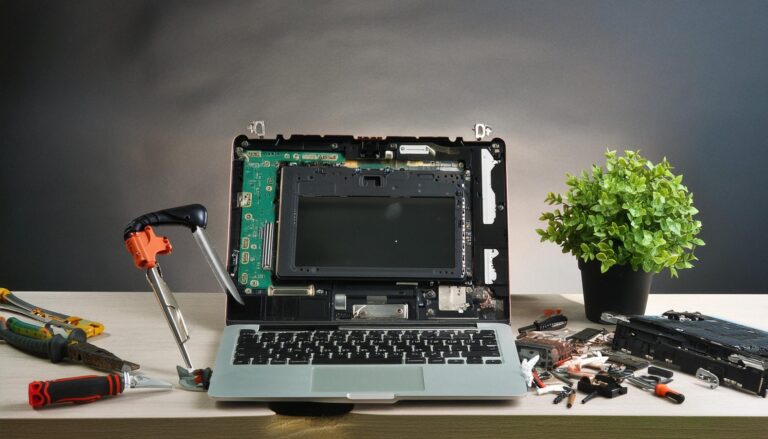
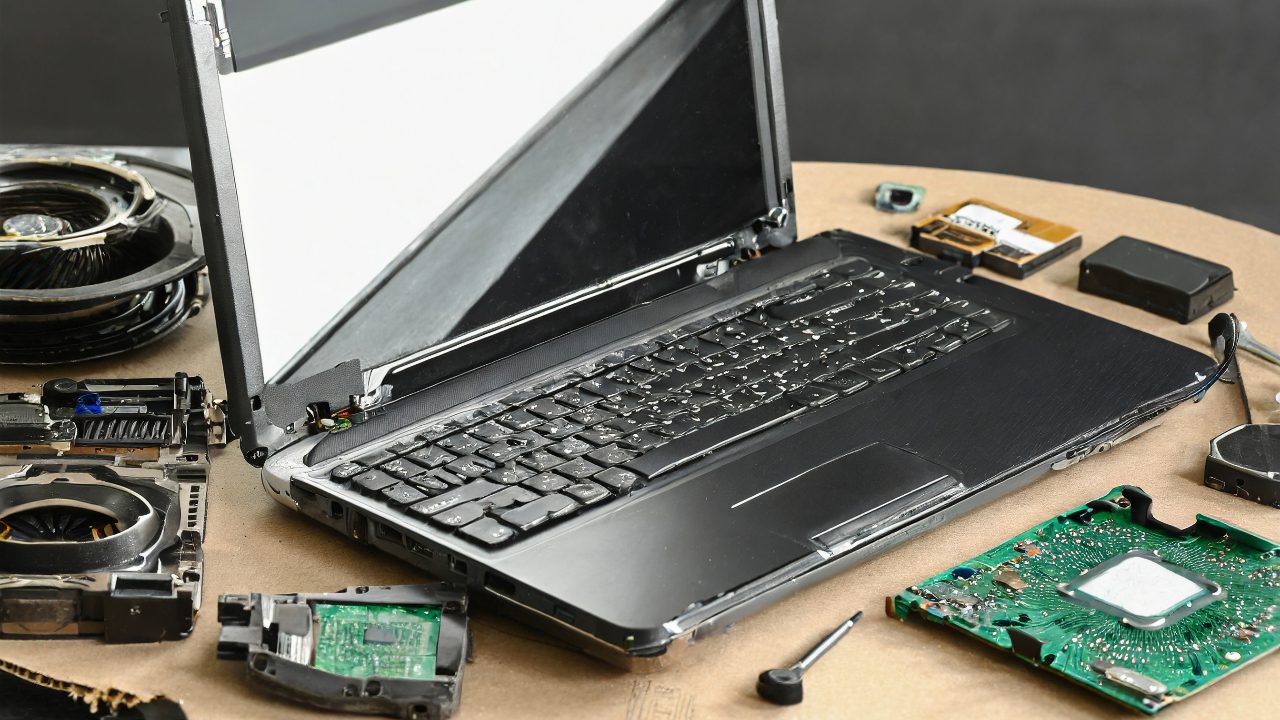
Dell Laptop (P42E001) Teardown Guide

Introduction

  • Objective: Disassemble a Dell laptop (Model: P42E001, 17-inch 7000 series).
  • Tools Required: Phillips screwdriver, plastic prying tools.

Steps for Teardown

1. Preparation:

  • Shutdown the laptop completely.
  • Unplug all cables and accessories.

2. Removing the Back Plate:

  • Remove all screws from the back. Note that the top three screws may not come out completely but will loosen.
  • Use a plastic prying tool to carefully lift and remove the back plate.

3. Battery Removal:

  • Disconnect the battery cable from the motherboard.
  • Remove screws holding the battery and lift out the battery.

4. Additional Drive Slot:

  • Show the additional slot for a 2.5-inch hard drive or solid-state drive.
  • Demonstrate the connection using the provided cable.

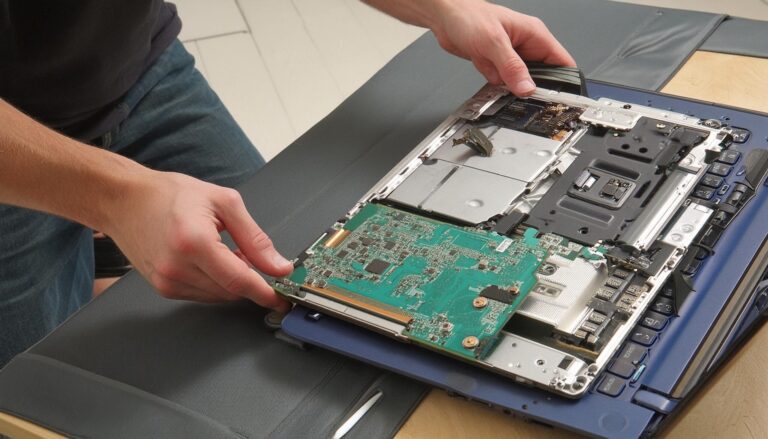
5. Disconnecting Components:

  • Carefully disconnect all visible cables connected to the motherboard.
  • This includes touchpad, speaker, keyboard backlit, Wi-Fi, CPU fan, and LCD cables.

6. Removing the CPU Fan:

  • Remove screws holding the CPU fan and disconnect the cable.
  • Lift out the CPU fan.

7. Motherboard Removal:

  • Remove screws securing the motherboard.
  • Open the laptop hinge slightly and carefully lift out the motherboard.

8. LCD and Keyboard Removal:

  • Remove the screws from the hinges.
  • Carefully separate the LCD screen from the keyboard and palm rest assembly.

9. Keyboard Assessment:

  • Examine the possibility of keyboard replacement.
  • Note the numerous tiny screws that might need to be removed for keyboard access.

Conclusion

  • This Dell laptop model allows for the disassembly of major components like the battery, additional drive, CPU fan, motherboard, LCD, and potentially the keyboard.
  • The process requires careful handling of cables and components.

Additional Notes

  • Ensure all connections are secure when reassembling.
  • The guide provides a general overview; the video offers more detailed visual instructions.

Legal Disclosure:

UberGeeks video(s) or information provided on this website does not, and is not intended to, constitute legal advice, constitute IT professional advise, information technology expert, or tech related material; instead, all information and content available on this are for entertainment purposes only. No information contained in this video shall create any express or implied warranty or guarantee of any particular result.

UberGeeks shall not be held liable for any damages, losses, injuries, loss of data, or harm arising from the use of information or techniques presented in our video(s) or information provided on this website. By accessing and using our content, you agree to release us from any liability.

Participation in any activities or experiments presented in our video(s) is entirely voluntary. If you choose to replicate any actions or experiments, exercise caution, and prioritize your safety and the safety of your equipment.

Thank you for joining us on this IT journey. We hope you find our video(s) enjoyable. Remember, your participation in this channel is at your own discretion, and we encourage you to use the information responsibly and safely.

Transparency Note:

This article was collaboratively written with the assistance of ChatGPT, an AI language model developed by OpenAI. While the content was generated with AI assistance, it was reviewed and edited by our human editorial team to ensure accuracy and quality. As part of our efforts to enhance the user experience, we utilize artificial intelligence (AI) technologies to generate images and visual content on this website. Adobe Firefly AI-generated images may include graphics, illustrations, and other visual elements.
Related Articles